
For turnarounds, workouts, and underperforming businesses
Technology Risk & Cost Recovery Assessment
Hidden technology risk can consume cash, interrupt operations, and derail the turn.
In a distressed business, technology is rarely anyone's top concern until it becomes the thing that blows up the timeline. An exposed server nobody knew about. A key employee who's the only one who understands the accounting system. A single vendor or employee holding the credentials, systems, or knowledge the whole operation quietly depends on — no bad intent required, just risk nobody's accounted for.
Reducing wasted technology spend and exposure — not collecting money owed.
We give turnaround professionals, CROs, lenders, interim managers, and PE operating partners a fast, independent read on the technology environment within distressed and underperforming companies.
Which situation fits you?
Where the risk actually hides
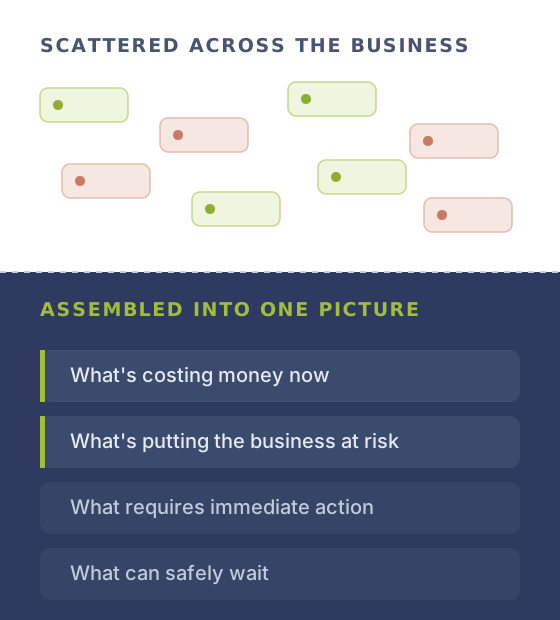
Some of it is buried in the P&L — thousands a month in software nobody's using, blended into ordinary operating expense, unlabeled as waste because no one's gone looking for it specifically. The rest is hidden in systems, contracts, access, and institutional knowledge.
That's the pattern. The information exists, but no one has assembled it into a clear picture of cost, risk, and operational dependency.
You'll know what's costing money now, what's putting the business at risk, what requires immediate action, and what can safely wait.
Built for the timeline you're actually on
You don't have months. You need answers quickly: what's urgent, what's expensive, and what can safely wait — and you need it in terms that plug straight into a stabilization plan, not a technical audit no one has time to read.
Why an outside look matters here more than anywhere else
An independent view
Most existing IT providers are good at what they were hired to do — keep day-to-day operations running. They were rarely, if ever, asked to look at the environment through a different lens: cash preservation, lender concerns, operational continuity under stress, accelerated diligence, or a distressed sale. That's not a knock on the work they've done — it's just a different question than the one they've been answering.
An outside assessment brings a fresh, evidence-based view of the whole environment and translates what it finds into the business decisions you're actually facing — not just a technical to-do list.
Recommendations that fit the business
We start with what the recovery plan actually needs. Sometimes the right answer is immediate investment. Sometimes it is consolidation, tighter control, a lower-cost option, or the confidence to delay spending. The recommendation should fit the business and the plan ahead.
The right technology decision is the one that best supports the business and the plan ahead.
What we've found — and what it was worth
23 unsupported servers and years of avoidable licensing costs — an unnecessary burden on a business already stretched thin.
Aging on-premises infrastructure nearing failure, no offsite backups, no disaster recovery, and licensing overspend nobody had noticed.
Physical servers at end of life with single points of failure, firewalls and wireless due for replacement, and default Microsoft 365 security features never enabled. Critical gaps were closed during the assessment itself, including VPN access still active for terminated employees.
Savings and avoided costs reflect what we found in these specific environments. Figures marked as modeled are estimates based on the environment and applicable risk assumptions, not incurred costs.
None of these companies had a complete picture of what the environment was costing or the exposure it created until we assessed it. That's the pattern: the waste and the risk often sit side by side, scattered across systems, contracts, and departments.
What we're looking for
Cost recovery & vendor exposure
Cash, commitments, and leverage, not just waste
- Licensing, subscriptions, and duplicate tools accumulated over years with no oversight — paying for two platforms when one would do
- Auto-renewing contracts, minimum commitments, and termination obligations — what can be cut now versus what remains contractually locked
- Technology spending scattered across departments, locations, and general operating accounts
- Critical technology vendors at risk of nonpayment or suspension, where an interruption could affect operations with little warning
Risk exposure
What could blow up the timeline
- Systems or data sitting exposed with no security, unknown to leadership
- Access broader than it should be — former employees with active accounts, shared logins nobody is tracking, and administrative rights handed out and never revisited
- Single points of failure: one vendor, one server, one login
- Mission-critical applications running on outdated, unsupported, unbacked-up systems
- Technology issues that distort reporting, billing, or operational decision-making — numbers leadership is relying on that may not be reliable
Key-person and continuity risk
What happens if someone walks
- Institutional knowledge that exists in one person's head and nowhere else
- Vendor and account ownership tied to an individual instead of the business
- No documentation a new operator or IT provider could pick up from
- Passwords, renewal dates, or vendor contacts known only to one person, with no backup record
- Vendor-controlled accounts, credentials, or assets that could complicate a transition, sale, or replacement
Financing and lender-facing risk
What's on the line under pressure
- Technology conditions that could affect continued funding, insurance, or lender confidence
- Gaps likely to surface during accelerated lender review, underwriting, or diligence
- What it takes to preserve operations, separate assets, transfer access, or support a sale, all on a compressed timeline
- Evidence and documentation that would need to be produced quickly if scrutiny increases
We structure the assessment to minimize disruption, using remote-first review and read-only access wherever practical. We validate the picture through leadership and staff interviews, system and access review, licensing and vendor analysis, documentation review, and, where appropriate, testing of critical controls such as backup and recovery.



Assessments are led by Jean Prejean, Principal, CISA and CISM certified, with project execution led by Wayne Speziale, Director of Operations, a certified Project Management Professional (PMP).
What you get
A prioritized findings report built around business impact, not technical severity — organized so you can act immediately:
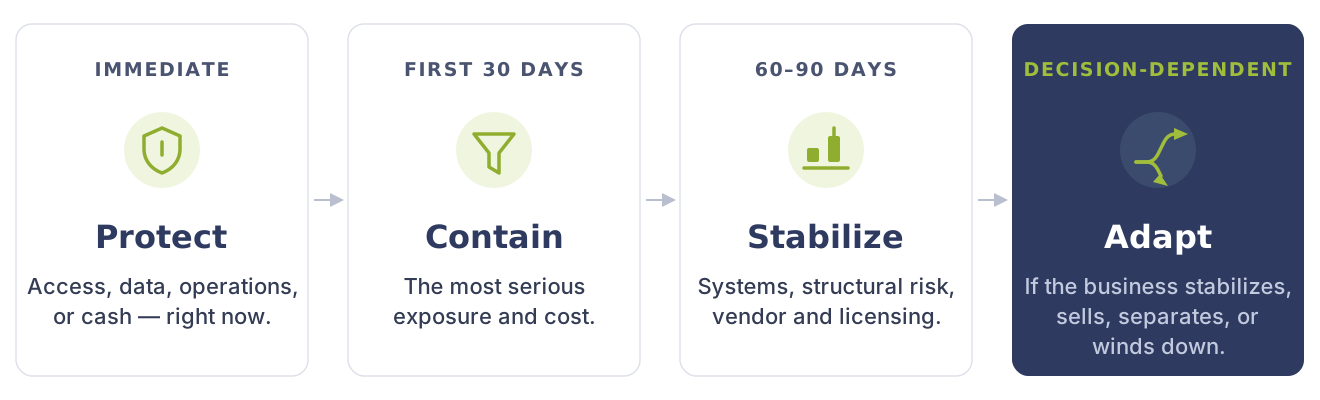
Actions required now to protect access, data, operations, or cash.
Contain the most serious exposure, recover the most obvious cost.
Stabilize systems, fix structural risk, right-size vendor and licensing spend.
What the environment needs to look like if the business stabilizes, sells, separates, or winds down — the roadmap adjusts to the outcome, not the other way around.
We can hand this directly to your team, or work alongside your other advisors — legal, financial, operational — as part of the broader stabilization effort.
Ready for a fast, clear-eyed read on the technology environment?
How this assessment fits. This isn't a valuation, a legal opinion, a financial audit, an insolvency opinion, or a guarantee of savings — and we're not trying to be. It's an outside technical and operational read that feeds into the decisions your other advisors are already making. We work alongside CROs, restructuring counsel, financial advisors, lenders, boards, and operating teams rather than trying to replace them.